



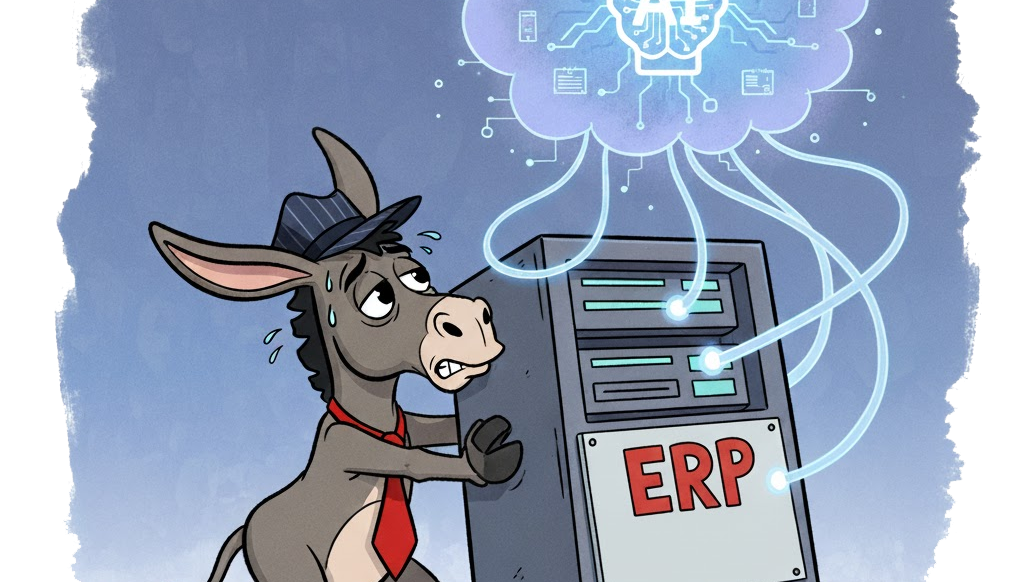
The simple truth is that embedding Artificial Intelligence (AI) into the core of an ERP isn’t merely a feature—it’s the definitive paradigm shift. Think about the sheer volume of transactional data flooding into a modern business every hour. No human team, however sharp, can parse that noise effectively. That’s where AI shines. It grabs those millions of data points—from sales figures and maintenance logs to customer service chats and logistical delays—and finds patterns we’d never spot.
This shift moves us from retrospection to prescription. The old ERP would tell you, “You ran out of widget X last quarter.” The AI-powered ERP screams, “Based on current climate data and projected shipping delays, you need to order 20% more of widget X right now, and here are three alternative suppliers.” It’s the difference between looking through a dusty ledger and having a personal, clairvoyant strategist whispering in your ear.
Take forecasting, for example. AI algorithms devour historical data and external variables—market volatility, competitor activity, social media sentiment—to generate forecasts that are wildly more accurate than traditional statistical models. This isn’t just about saving money; it’s about freeing up capital, reducing waste, and seizing market opportunities the instant they appear. Similarly, in cybersecurity and fraud detection, the AI acts as an always-on sentinel, catching subtle anomalies that a rule-based system would miss entirely.
But here’s the kicker: this seismic change brings a serious wake-up call. An AI is only as good as the data you feed it. If your foundational data is a mess—incomplete, inconsistent, or siloed—the AI will only help you generate spectacular mistakes, faster. Furthermore, companies have a moral obligation to ensure transparency. We must know why the AI made a specific recommendation, especially concerning HR or financial decisions, to mitigate any ingrained biases.
Ultimately, the goal isn’t just automation; it’s augmentation. AI takes the heavy lifting off the shoulders of employees, turning data analysts into strategic thinkers, and finance managers into future predictors. If your ERP remains a passive bucket for data, it’s holding your business hostage to the past. The intelligent ERP is the only way forward, transforming that old database into the central nervous system of a truly modern, competitive enterprise.